Eau Claire Manufacturers: The Case for Co-Managed IT When You Already Have One Tech
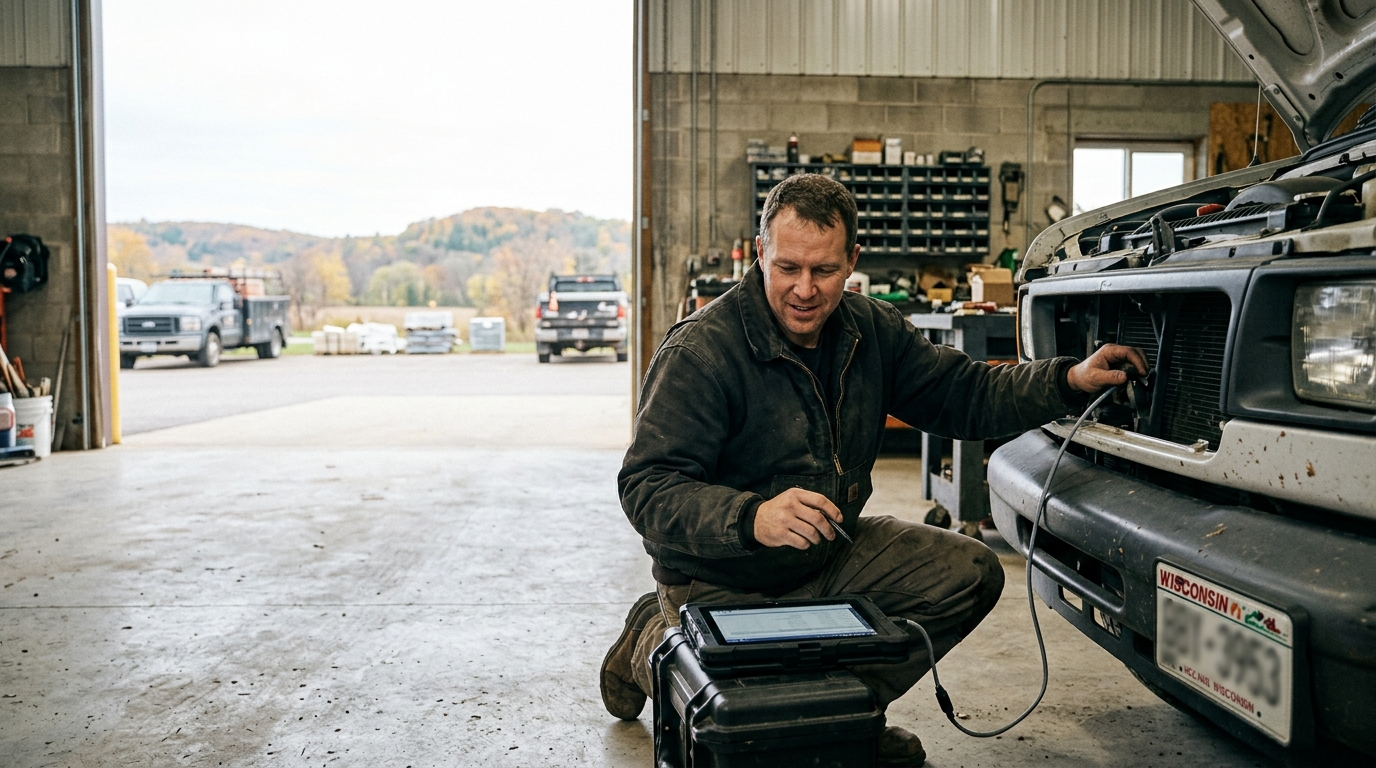
One internal technician cannot cover nights, vacations and a server migration at the same time. Co-managed splits the work without taking the job.
Your internal IT person is stretched too thin.
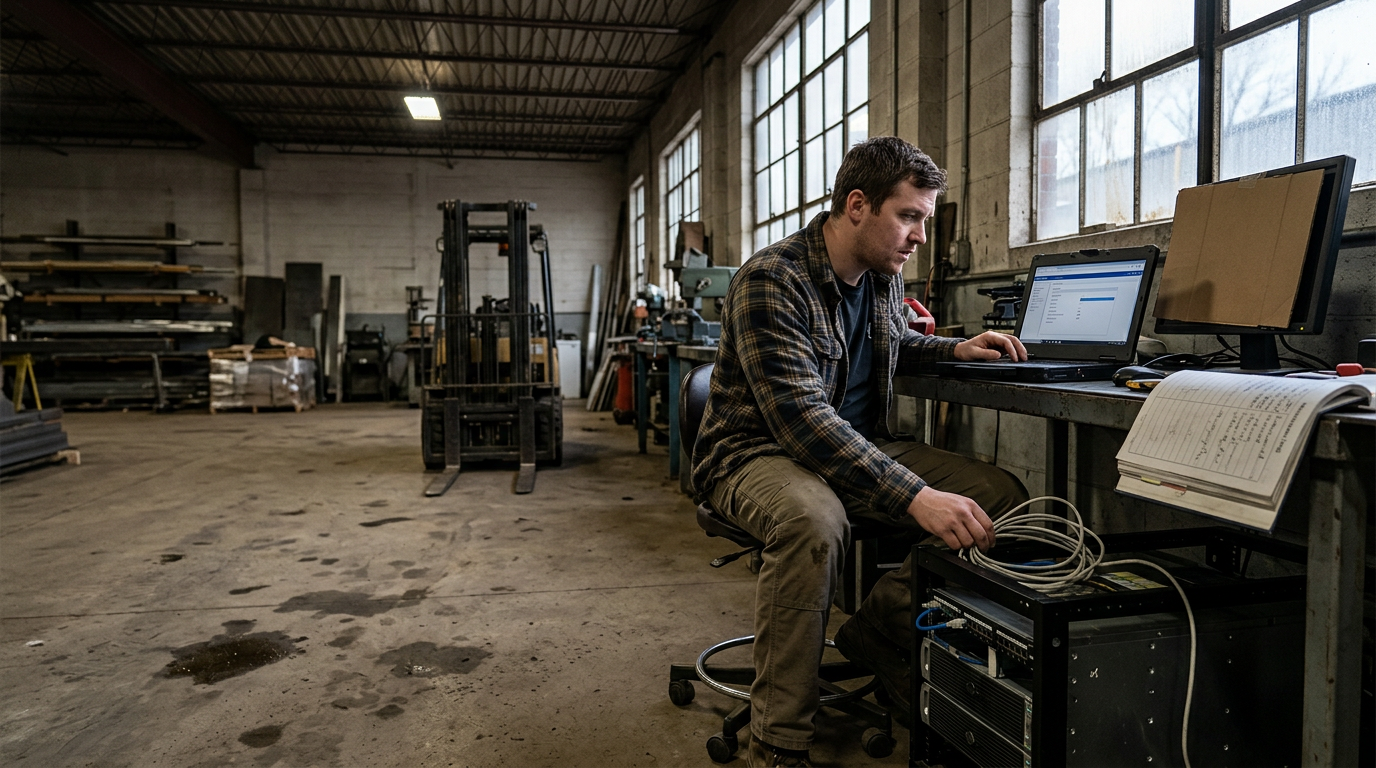
On any given week, they are managing your ERP and shop-floor systems, answering help-desk tickets from the line, patching servers, handling vendor calls, and trying to keep up with security compliance. Then your main server needs a migration, or someone's laptop dies, or it's their scheduled vacation, and suddenly nothing gets done because one person cannot be in two places at once. At night, when the plant is running lights-out, nobody is watching the network. If a breach happens at 2 a.m., you find out Monday morning.
This is not a staffing failure. It is a math problem. One technician cannot realistically cover 24/7 monitoring, vacations, security operations, a help-desk queue, and a major project at the same time. The question is not whether you need more IT capacity, you do. The question is how to get it without hiring a full second engineer.
What Co-Managed IT Actually Is
Co-managed IT is a shared-responsibility model. Your internal technician keeps the high-context work: they own your ERP and MES systems, they know your vendors, they handle day-to-day user support, and they drive your strategic IT decisions. An outside partner layers in what one person cannot do alone.
For a manufacturer, that usually means:
- 24/7 network monitoring and alerting so threats are caught in real time, not discovered after hours
- Advanced cybersecurity work like penetration testing and vulnerability scans that require specialized tools and expertise
- Project capacity for server migrations, cloud transitions, and infrastructure upgrades that would otherwise stall your operations
- After-hours helpdesk coverage so a production issue at 10 p.m. does not wait until morning
- Backup and disaster-recovery operations that your internal tech does not have time to test and maintain
Your technician still owns the relationships with your line supervisors, your ERP vendor, and your equipment manufacturers. They still answer the day-to-day questions. But they are no longer the single point of failure for everything that keeps the plant running.
The Cost Math: Second Hire vs. Co-Managed
Industry data shows a second full-time IT engineer costs roughly $110,000 to $145,000 fully loaded, salary, benefits, equipment, training. That is a fixed cost whether you need two people or not.
A co-managed engagement for a 50-user manufacturer typically runs $3,500 to $6,000 per month, or $42,000 to $72,000 per year. For a 30-person shop in Wisconsin, fully managed IT services run in the $150 to $225 per user per month range, which works out to $4,500 to $6,750 per month.
Co-managed is usually cheaper than a full second hire, and you are not paying for capacity you do not use. But the real win is not just the dollar difference. It is that you keep your internal person, the one who knows your systems, your people, and your business, while adding the coverage you need.
What Stays on Your Tech's Plate
Your internal technician should keep doing what they do best:
- Day-to-day helpdesk and user support
- ERP and MES system administration
- Vendor coordination and relationships
- Strategic IT planning with management
- Hands-on troubleshooting of line-specific equipment
They are not being replaced. They are being freed up to do the work that actually requires them to be there, in the plant, talking to people who know your operation.
What the Partner Covers on a Factory Floor
The outside partner handles the work that does not require that context:
- Network monitoring and threat detection running 24/7 so you are not blind at night
- Penetration testing and security assessments to find vulnerabilities before someone else does
- Server and infrastructure migrations that your tech does not have time for
- Backup testing and disaster recovery so you know your data is actually recoverable
- After-hours support for production issues that cannot wait until morning
On a factory floor specifically, this means the partner can handle network-layer security, cloud infrastructure, and project work while your technician stays focused on the systems and people that make your plant unique.
Why These Arrangements Fail (And How to Avoid It)
Co-managed relationships fail most often when the internal technician treats the outside partner as a threat. They control information, restrict access, and wall off parts of the infrastructure. This is understandable, they are worried about losing their job, but it makes the partnership impossible.
Two practical deal-killers to watch for at the contract stage:
Tooling conflicts. If your internal tech insists on one remote-management tool and the partner uses a different one, running both creates operational headaches and blind spots. This needs to be solved before you sign, not after.
Undefined scope. If you cannot write down clearly what the partner owns and what your tech owns, you will spend the first six months arguing about it. A good co-managed agreement spells out responsibilities in writing so there is no confusion when something breaks.
The best co-managed relationships start with a conversation about what your tech is actually doing today and what they should stop doing to make room for the partnership. That clarity prevents the tribal behavior that kills most deals.
Wisconsin-Specific Context You Should Know
If you are a manufacturer in the Chippewa Valley, a few Wisconsin-specific things matter:
Emergency management. Wisconsin has a structured emergency-management framework under Chapter 323 of the Wisconsin Statutes. During a governor-declared state of emergency, the Wisconsin Emergency Management (WEM) agency coordinates the response. For cyber or telecommunications incidents specifically, the Department of Administration may be designated as the lead agency. Businesses can join the Business Emergency Operation Center to coordinate with state and local response during a disaster. A co-managed partner who understands this framework can help you plug into it.
Breach notification. Wisconsin law requires notification of cybersecurity events under specific conditions. Wisconsin Statute 601.954 governs notification for insurance licensees and addresses the role of third-party service providers. If your co-managed partner is handling security operations, they need to understand these obligations.
Manufacturing resources. Wisconsin operates a Manufacturing Extension Partnership (WMEP) that helps small and mid-size manufacturers with technology assessments, including IT-OT integration on the shop floor. This is a no-cost resource if you are evaluating how to connect your IT infrastructure to your production systems.
What to Look for in a Local Partner
When you are evaluating a co-managed provider, three things matter:
On-site response. You need a partner who can be in your plant when something breaks, not a remote help desk three states away. If your production line goes down at 3 p.m., you need someone who can be there in an hour, not a ticket in a queue.
Flat-rate pricing. The whole point of co-managed is predictability. If the second pair of hands turns into surprise bills because a project runs long or a security incident requires extra hours, you have not solved the problem, you have just moved it. Look for a partner who prices on a flat-rate managed model so you know what you are paying.
One partner across the stack. You need IT, cybersecurity, phones, cloud, and AI covered by the same team. When something breaks on the line, you do not want to spend an hour figuring out whether it is an IT problem, a security problem, or a cloud problem. One partner means no vendor finger-pointing.
Map out what your one tech handles today and what a co-managed partner would cover. A 30-minute call with our team is enough to put a draft scope on paper so you can decide whether the second-hire math or the co-managed math makes more sense for your facility.