The 2026 Hurricane Season IT Checklist for Southwest Florida Businesses
NOAA is forecasting a below-normal 2026 hurricane season — but Southwest Florida knows it only takes one storm. Here's the IT preparation checklist to work through before a watch is ever issued.
NOAA's outlook for the 2026 Atlantic hurricane season is, on paper, good news: a below-normal season, with 8 to 14 named storms, 3 to 6 hurricanes, and 1 to 3 major hurricanes predicted, largely thanks to a developing El Niño.
If you have run a business in Fort Myers, Cape Coral, Naples, Estero, Bonita Springs, or anywhere else in Lee County for any length of time, you already know how much weight to put on that. Hurricane Ian made landfall in Southwest Florida as a Category 4 storm in September 2022 — and the season forecast that year was near-normal. The forecast describes the season. It says nothing about your street.
The season runs June 1 through November 30, so the time to work through this list is now — not when a cone appears on the evening news.
1. Prove your backups work — don't assume
The question is not "do we have backups?" It is "when did we last restore something from them?"
- Follow the 3-2-1 rule: three copies of your data, on two different types of storage, with one copy off-site (cloud counts).
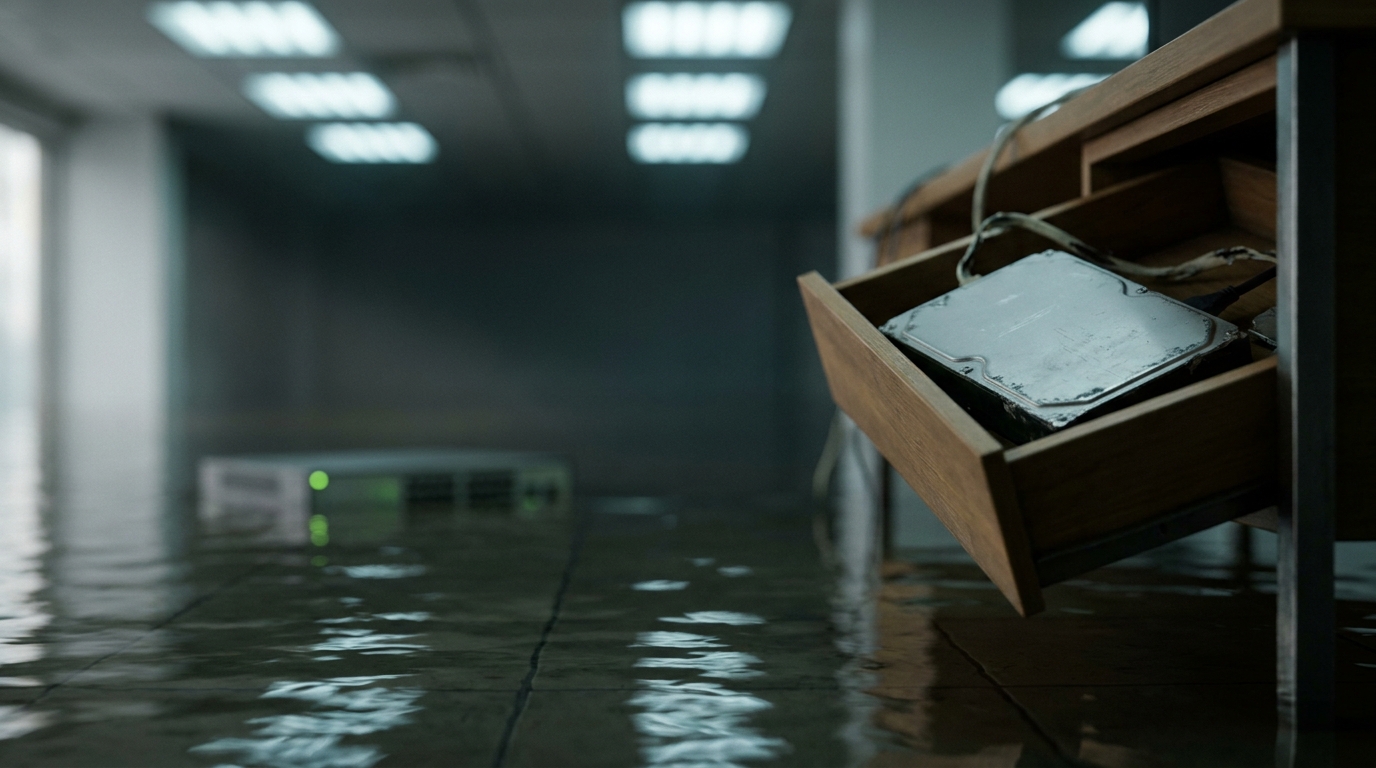
- An external hard drive in a desk drawer in the same building as your server is not a hurricane backup. Neither is one in the manager's house two miles away.
- Do a test restore of a real file and a real system this month. A backup that has never been restored is a hope, not a plan.
2. Plan for power, not just wind
Extended outages do more IT damage than rain does.
- Every server and network closet should have a UPS (battery backup) big enough to allow a clean shutdown.
- Know the shutdown order for your equipment, write it down, and make sure more than one person can do it.
- If you run on a generator, confirm your network gear and internet equipment are actually on the generator circuit. Plenty of businesses have discovered mid-storm that the fridge was and the firewall wasn't.
3. Make your phones storm-proof
If your phone system lives in your office, it evacuates when you do — unless it's cloud-based.
- Cloud VoIP systems can reroute your main business number to cell phones in minutes, from anywhere.
- If a storm is approaching, set your failover rules before you close the office: where calls go, who answers, what the after-hours message says.
4. Get remote-work ready before you need it
After Ian, some businesses were locked out of their buildings for weeks. The ones who kept operating were the ones whose teams could work from anywhere.
- Confirm who has laptops and who is desk-bound.
- Test your VPN or remote access under load — everyone at once, not one person on a Sunday.
- Make sure cloud file access works without being inside the office network.
5. Protect the hardware you leave behind
- Move servers, PCs, and network gear off the floor — storm surge and roof leaks ruin more equipment than wind.
- Unplug what you can before evacuating. Power restoration surges claim their share of electronics.
- Photograph every piece of equipment (with serial numbers where possible). Your insurance adjuster will thank you, and so will your claim.
6. Put the plan on paper
Ready.gov's business continuity guidance is a solid free framework. At minimum, write down:
- Who declares "we're activating the storm plan," and at what trigger
- Emergency contacts: employees, your IT provider, your ISP, key vendors, your insurer
- Where the backups are and how to reach them
- How you'll communicate with customers if email and phones are disrupted
Then keep a copy outside the building — in the cloud and printed.
The takeaway
A below-normal forecast is a good reason to feel fortunate. It is a terrible reason to skip preparation, because forecasts describe averages and storms destroy specifics.
Coulee Tech's Fort Myers office supports businesses across Lee County and the surrounding communities — Cape Coral, Naples, Estero, Bonita Springs, Lehigh Acres, Sanibel, and Fort Myers Beach — with backup and disaster recovery built for exactly this scenario, plus IT support and network support that stay reachable when the office isn't.
If you want a second set of eyes on your storm readiness before the season peaks, we're happy to take a look.