The Excel Report Tax: What Manual Reporting Really Costs Your Business
The hours spent pulling numbers into spreadsheets never show up as a line item, but they're a real, recurring cost. Here's how to see it.
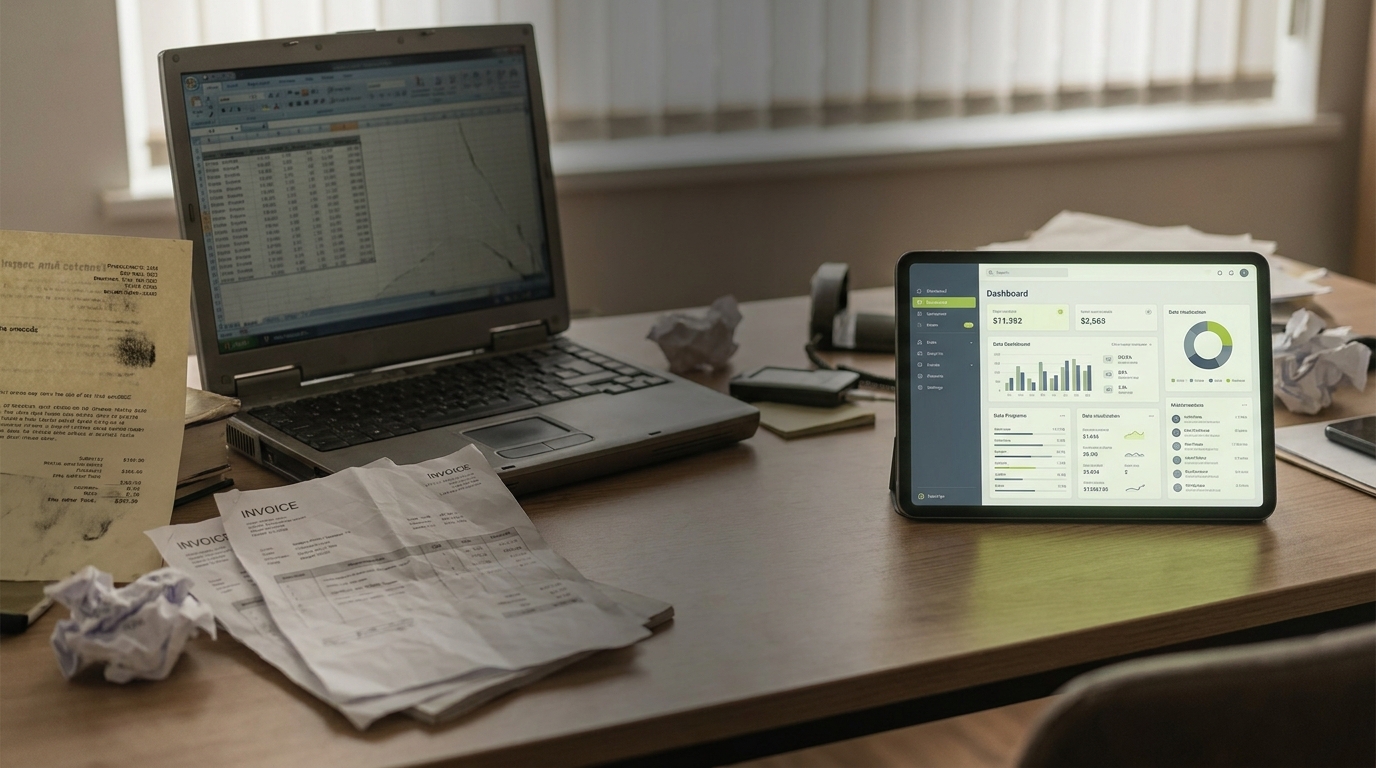
Every business has one. Somewhere in the week, someone sits down, opens five different systems, copies numbers into a spreadsheet, reformats it so it looks right, and emails it to a handful of people who glance at it and move on.
It might be a Monday morning sales summary. A monthly finance rollup. A weekly ops report pulled from three different tools that don't talk to each other. Whatever it is, it takes real time, and it happens on a loop that never stops.
We call this the Excel Report Tax. It's not a line item on any budget. Nobody approved it. But it's paid every single week, in staff time and in decisions made a little too late.
Why This Happens in Almost Every Business
This isn't a sign that a team is disorganized. It's usually the opposite — it's what happens when capable people build a workaround for a real problem, and that workaround quietly becomes permanent.
Systems don't talk to each other. Your accounting software, your CRM, your scheduling tool, and your point-of-sale system were built by different companies, at different times, for different purposes. None of them were designed with each other in mind. A spreadsheet becomes the translator that sits in between.
"We've always done it this way." The report was built once, a long time ago, by someone who may not even work there anymore. Nobody remembers why certain columns are calculated a certain way. Changing it feels risky, so it stays exactly as it is, copied forward month after month.
Nobody owns fixing it, because everyone's busy doing it. This is the quiet trap. The person building the report every week is usually too busy building the report to step back and ask whether there's a better way. Fixing the process would take time up front — and there's never a slow week to spare that time.
None of this is a failure on anyone's part. It's what happens by default when growth outpaces the tools meant to support it.
The Real Cost Isn't Just the Hours
It's tempting to measure this tax in hours alone. Say it's four hours a week for one employee. Over a year, that's roughly 200 hours — a full month of work spent assembling reports instead of doing anything else.
But the hours are only part of the bill.
The bigger cost is timing. By the time a weekly report is built, checked, and sent, it can already be several days old. A monthly report might reflect numbers that are three or four weeks stale by the time anyone reads it. Decisions get made on that data anyway — because it's the only data available — even though it no longer reflects reality.
A staffing decision gets made on last month's demand. A purchasing decision gets made on a sales trend that's already shifted. An owner tells a lender or a partner a number that was accurate two weeks ago and isn't anymore. None of these are dramatic failures. They're small, steady drags on decision quality, and they compound.
There's also a quieter cost: the report itself becomes a bottleneck. If only one person knows how to build it, questions have to wait for that person's availability. "Can you pull last quarter's numbers by region?" turns into a multi-day request instead of something anyone could answer in a minute.
What Changes When the Data Is Live
The fix isn't asking people to work faster or be more careful with formulas. The fix is removing the manual assembly step entirely.
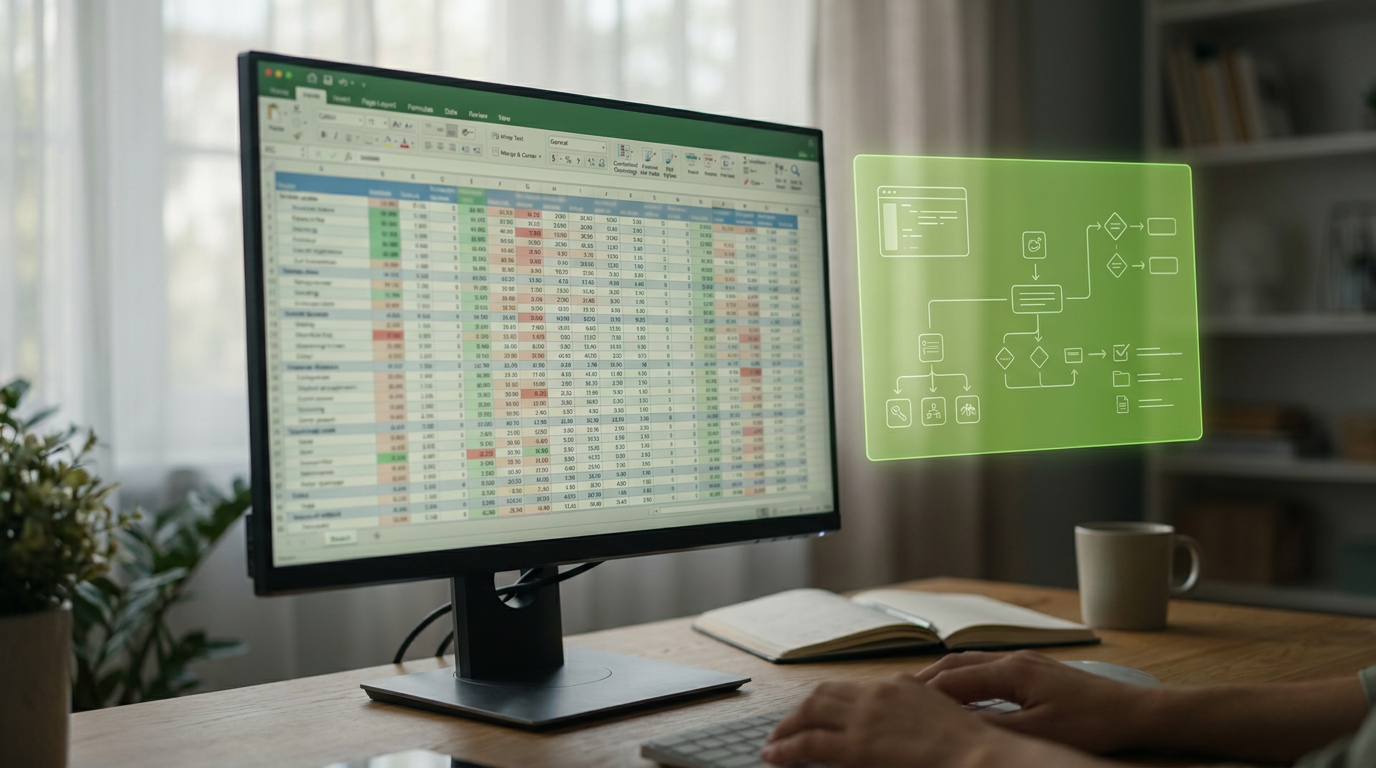
When your systems are connected to a live dashboard, the same data you've always had gets pulled automatically, refreshed continuously, and displayed in one place. Nobody logs into four platforms and stitches numbers together by hand. The dashboard does that work in the background, every time, the same way.
AI adds a second layer on top of that. Instead of needing to know which filters to click or which pivot table to build, someone can simply ask a question in plain English — "how did sales in the western region compare to last month?" — and get an answer pulled from current data, not last week's snapshot.
This doesn't just save the hours that used to go into building the report. It changes what people do with those hours, and it changes the quality of the decisions made along the way, because the numbers on the screen reflect what's actually happening right now.
It also removes the single-person bottleneck. When the data lives in a shared, live dashboard rather than in one person's spreadsheet habits, anyone with access can ask the question themselves, whenever they need the answer.
The goal isn't a fancier report. It's not having to build one in the first place.
Where This Fits Into Your Business's AI Maturity
The Excel Report Tax is really a symptom of two things: where your data lives, and how connected your technology is. Those are two of the core dimensions we look at in our AI Business Maturity Assessment — a free, no-pressure way to see where your business stands and where the highest-value next step actually is.
This is also exactly the problem we built RapidDashboard.AI to solve — connecting the systems you already use into one live, plain-English dashboard, so nobody on your team has to rebuild the same report by hand ever again.
If this sounds familiar, we're happy to talk through what it would look like for your business. Contact us and we'll start with a conversation, not a sales pitch.